
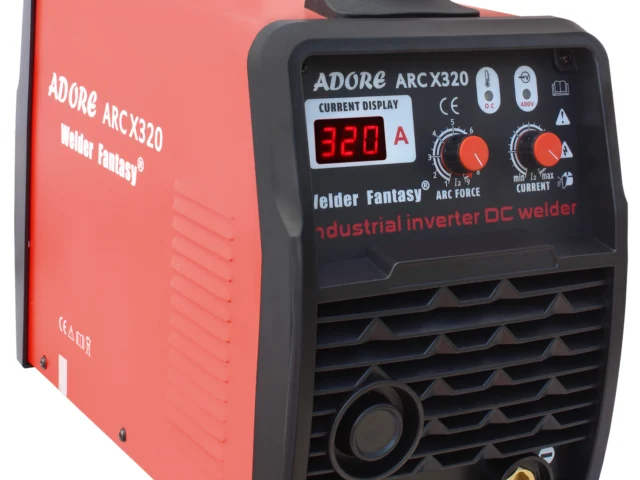
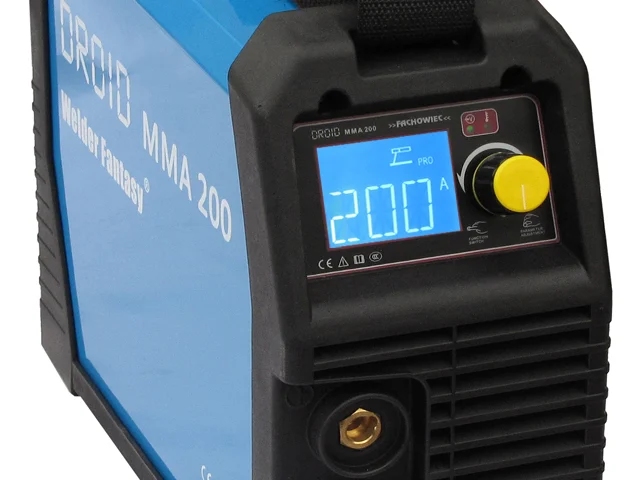
Current is matched to the electrode diameter. A 2.0 mm electrode works at 50 to 80 A, 2.5 mm at 70 to 110 A, 3.2 mm at 100 to 150 A, 4.0 mm at 140 to 200 A, 5.0 mm at 190 to 260 A. A domestic 230 V installation on a 16 A fuse will run an electrode up to 3.2 mm, heavier work calls for 400 V.
For basic electrodes choose a machine with an open circuit voltage of at least 60 V and a strong hot start, otherwise striking the arc will wear you out and the start of the weld will come out porous. Set arc force higher with basic electrodes and lower with rutile ones to limit spatter.
The duty cycle at your working current says more than the maximum current does. 160 A at 35 percent is a machine for a fitter, 250 A at 60 percent is equipment for a full day in the workshop.
If you work off a generator or on a weak supply, choose an inverter with a wide input voltage range, for example from 180 to 260 V. For a generator count on at least twice the power the machine draws, otherwise the voltage will sag as the arc strikes.
With long leads keep an eye on the cross section. 50 m of 2.5 square millimetre cable means a noticeable voltage drop, at those distances use 4 square millimetres, and choose welding leads from 25 square millimetres upwards depending on the current. Most machines have a socket for a TIG lift torch, which widens their range without buying a second unit.