
MMA is the simplest process to run and the least sensitive to wind, which is why it still wins in the field and on repair work. You match the current to the electrode diameter: 2.0 mm is about 50 to 80 A, 2.5 mm is 70 to 110 A, 3.2 mm is 100 to 150 A, 4.0 mm is 140 to 200 A, 5.0 mm is 190 to 260 A. A domestic 230 V circuit with a 16 A fuse will sensibly run an electrode up to 3.2 mm.
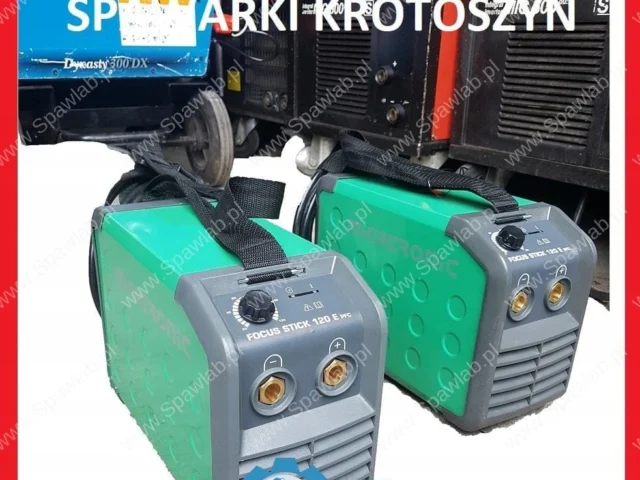
For basic electrodes you need a machine with an open circuit voltage of at least 60 V and a working hot start, otherwise striking the arc will wear you out. Set arc force higher with basic electrodes and lower with rutile ones to keep spatter down.
With MMA the duty cycle decides the pace of the job. 160 A at 35 percent is a machine for a fitter, 250 A at 60 percent is a machine for a workshop.
If you work off a generator, check in the listing whether the unit has a wide input voltage range. Inverters that accept from 180 to 260 V cope with a weak supply on site. With long extension leads remember the conductor cross section: 50 m on 2.5 square millimetres is already a clear voltage drop, 4 square millimetres is better.
Most of our MMA machines have sockets for TIG lift, so adding a TIG torch widens their range without buying a second unit. We always state in the listing whether that option works.