
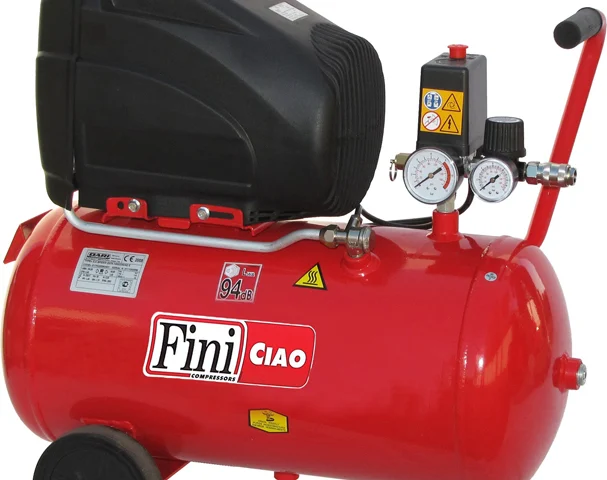
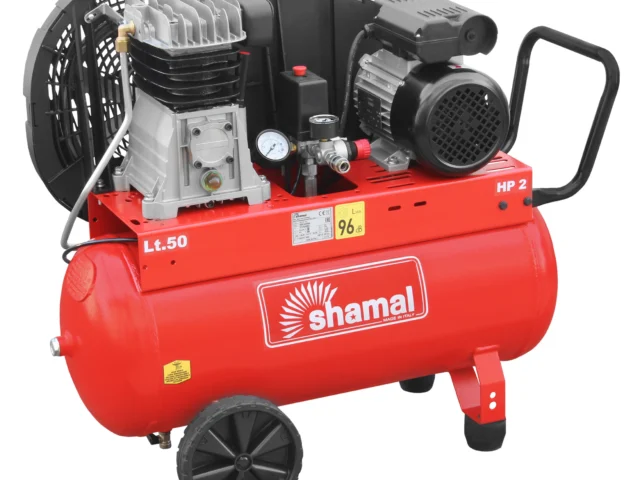
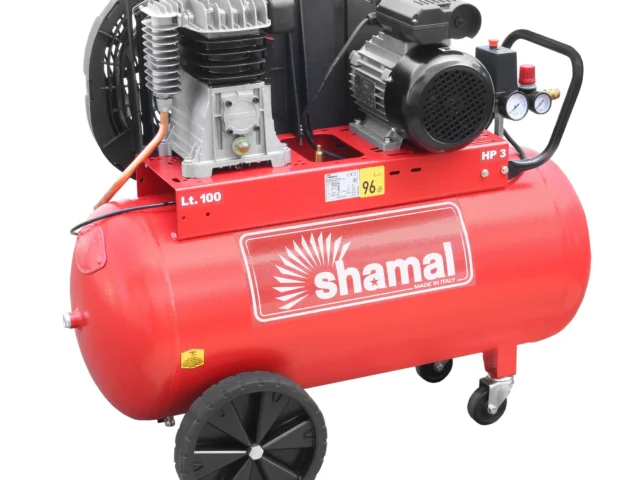
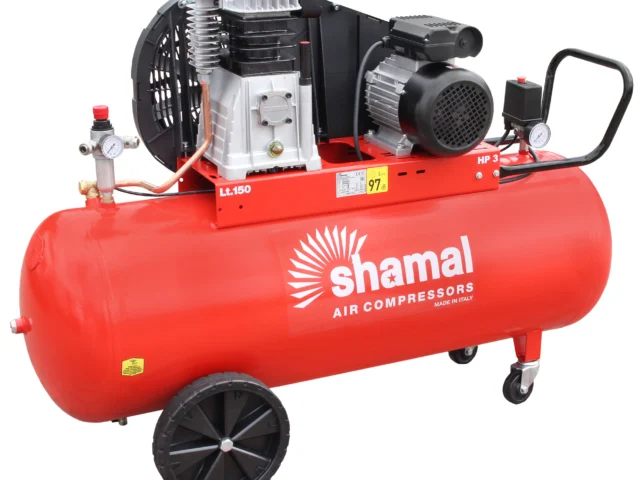
You size a compressor from the consumers back. Add up the demand of your tools in litres per minute and add 30 percent for leaks and future expansion. An impact wrench takes around 250 l/min, a die grinder 350 l/min, an HVLP spray gun from 250 to 400 l/min in continuous use. For plasma cutting allow 150 to 250 l/min at 5 to 6 bar, depending on the cutting current.
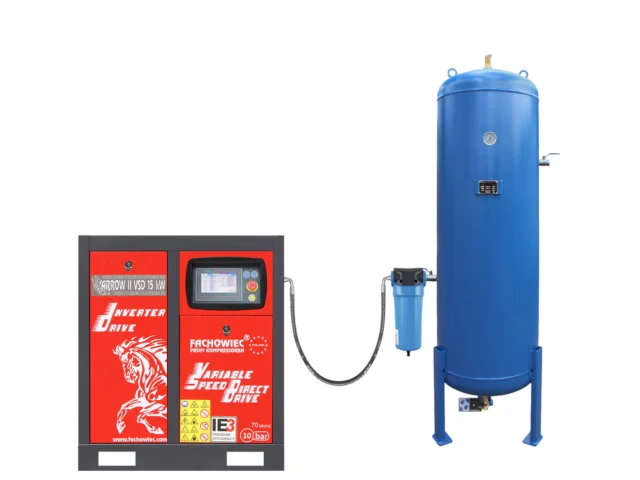
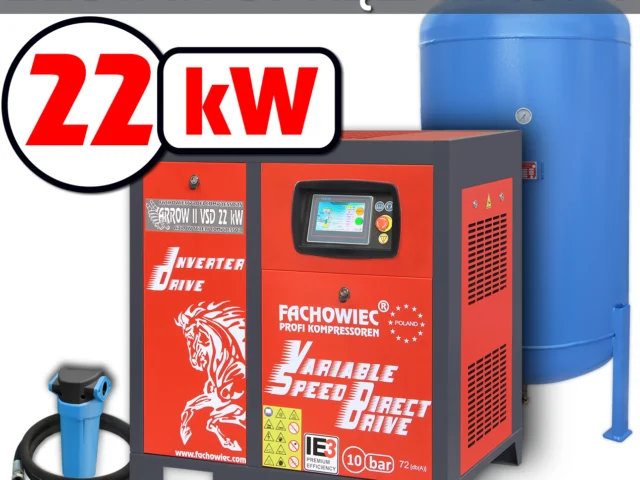
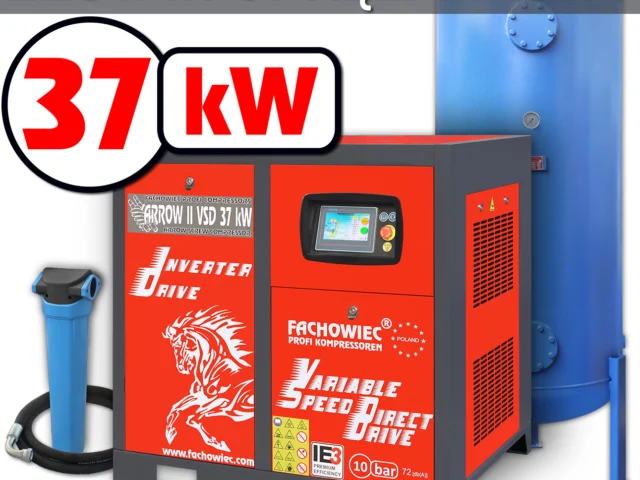
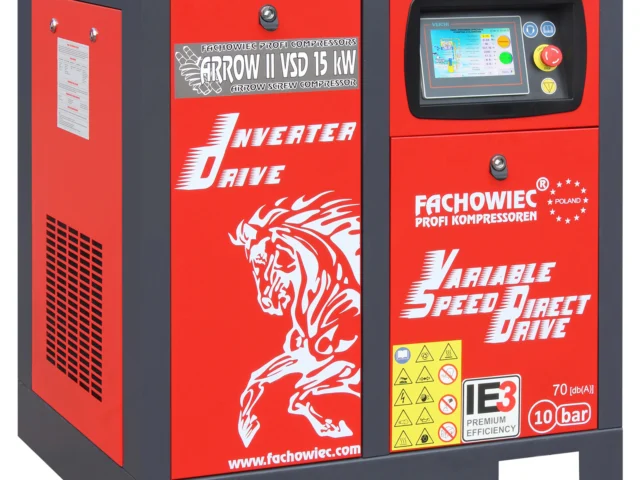
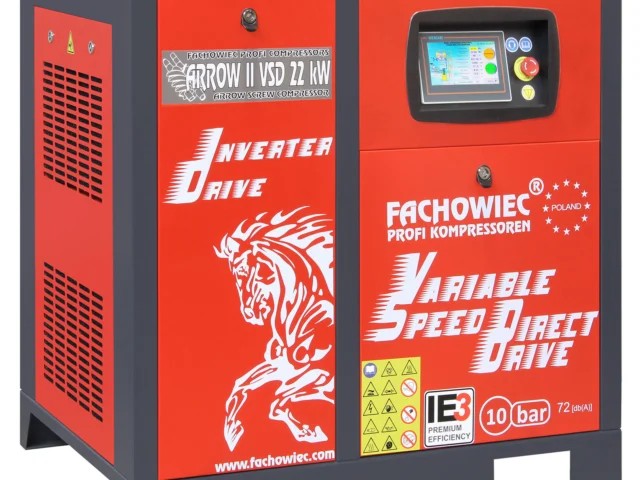
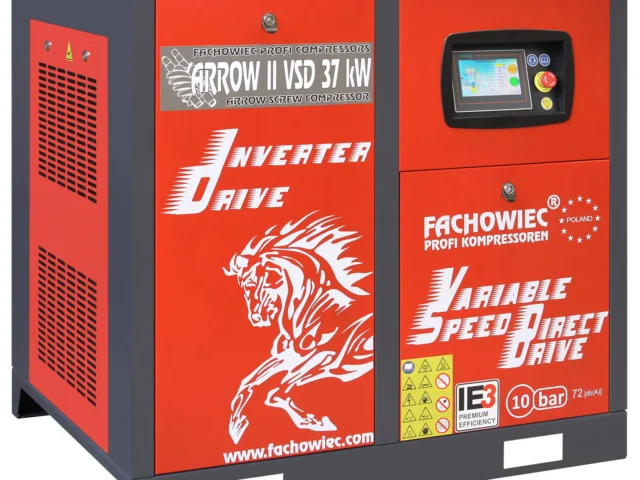
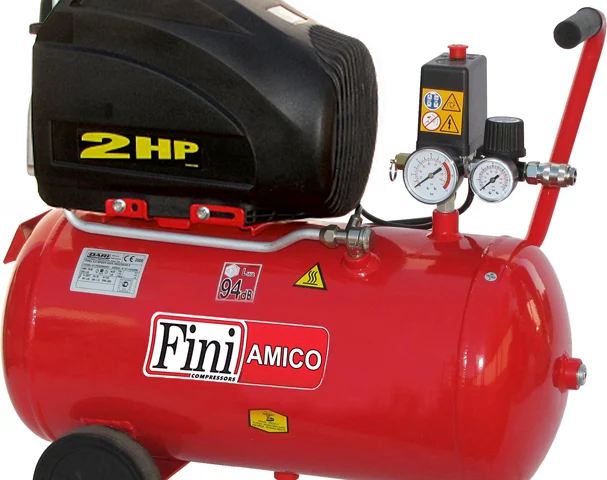
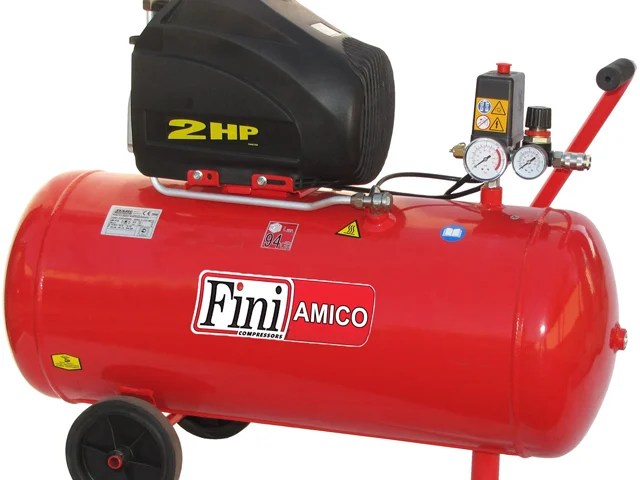
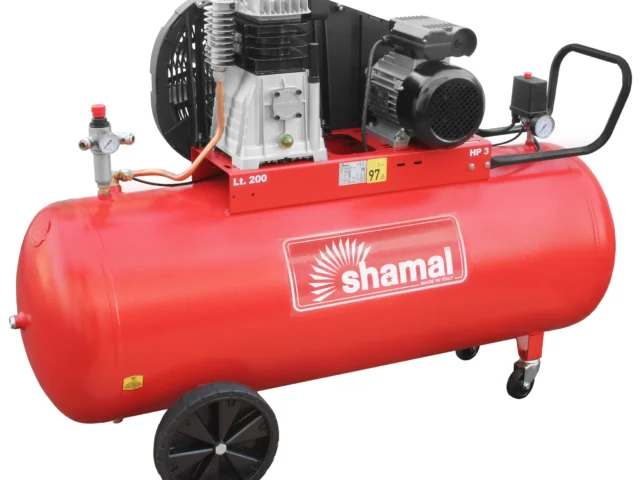
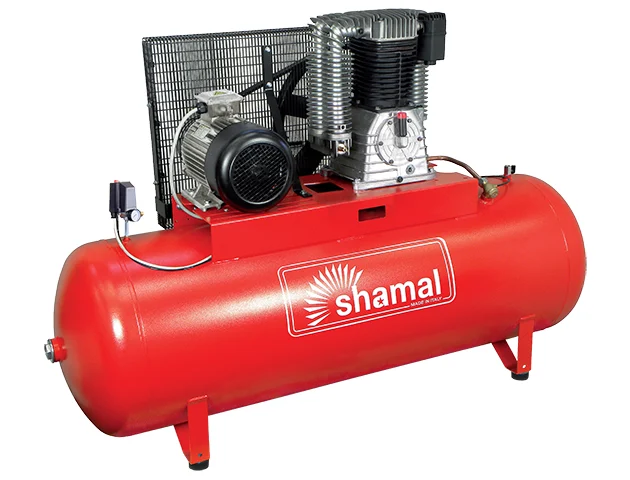
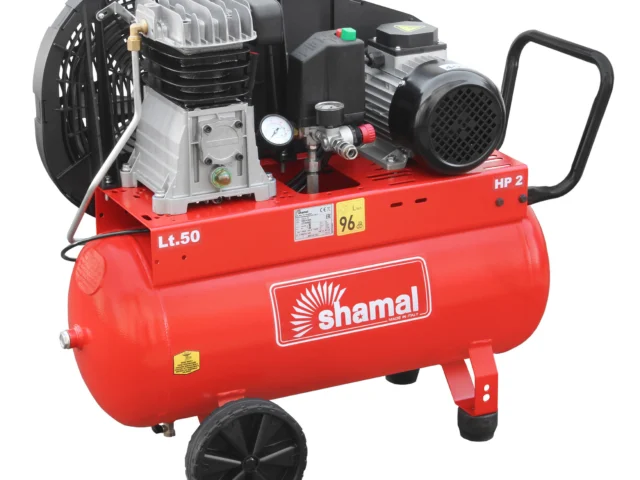
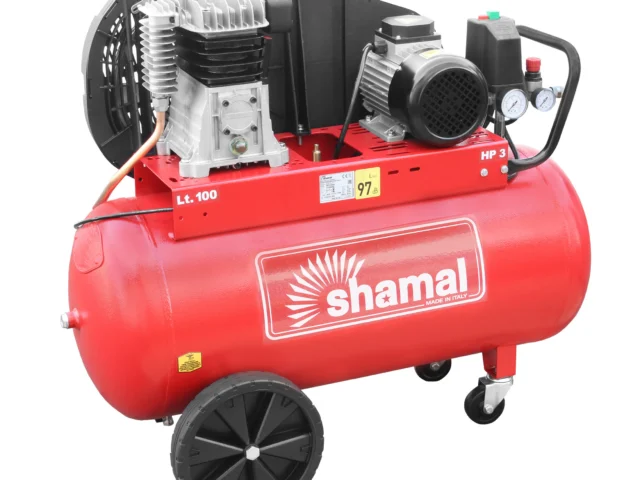
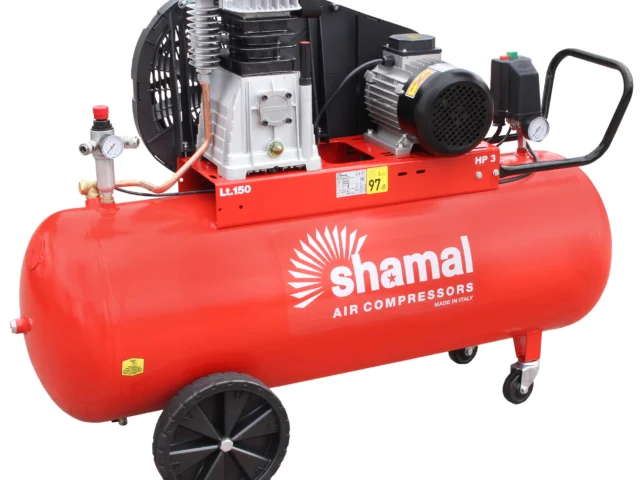
A piston compressor runs in cycles and needs breaks. For a workshop where pneumatic tools run a few hours a day, a unit of 200 to 500 l/min with a 100 to 270 litre tank is enough. A screw compressor is built for continuous duty, runs quieter, holds pressure steady and uses less power per unit of air, but it only pays off above 500 l/min for many hours at a time.
Check the power supply. Models on 230 V stop at roughly 2.2 kW, anything above that is 400 V and a 16 or 32 A socket. Piston motors start under load, so on a weak installation check whether the compressor has an unloader valve.
The air has to be dry. In welding and painting, moisture destroys plasma nozzles and ruins coatings. A refrigerant dryer brings the dew point down to about 3 degrees Celsius and a coalescing filter catches oil and water. For plasma use at least a filter with a separator, for spray painting a three-stage set.