

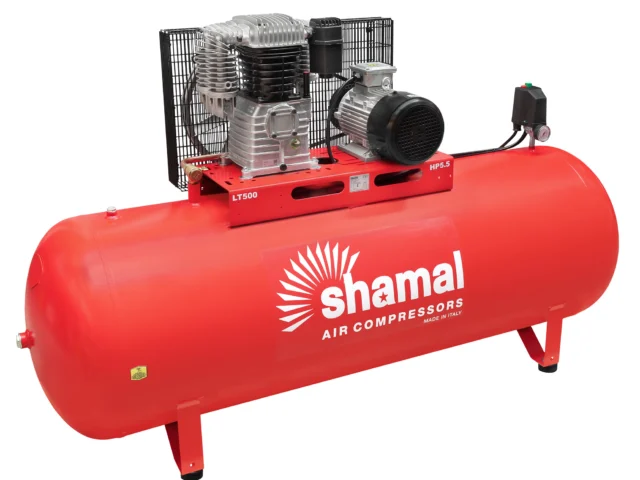
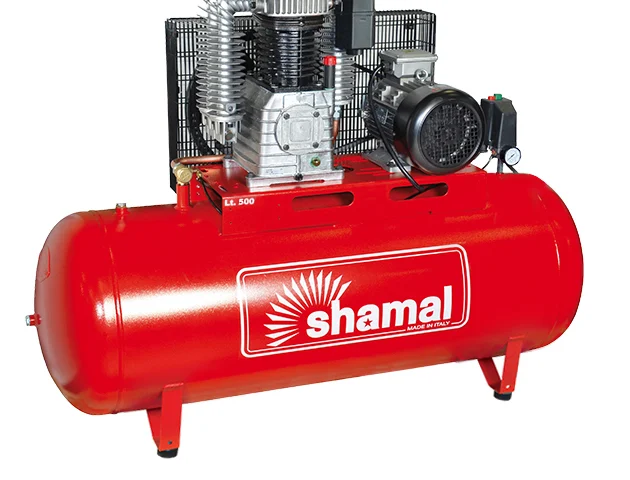


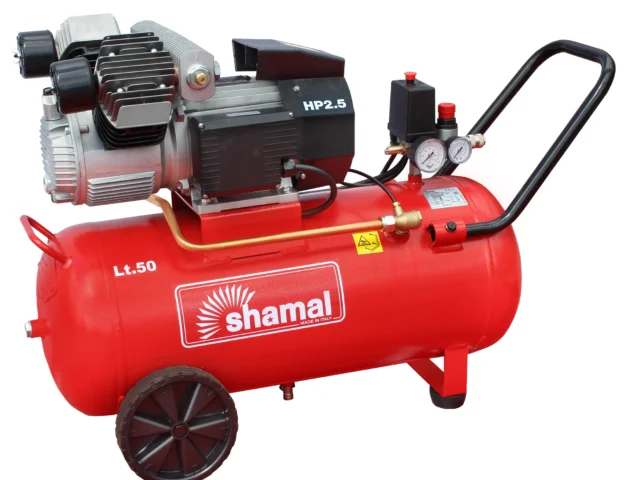
A piston compressor is built for intermittent duty. Manufacturers quote intake capacity, which is a theoretical figure, so count on about 65 to 70 percent of that as the air you really get at the outlet. If the catalogue says 400 l/min, assume a real 260 to 280 l/min and size your tools to that.
The drive matters once you work longer than a few minutes. A direct drive compressor is cheaper and lighter, but it turns faster, runs hotter and is noisier. A belt drive turns slower, usually has a cast iron head and oil lubrication, and lasts several times longer at the same output.
The tank evens out pressure and cuts the number of motor starts. For a blow gun and tyre inflation, 24 to 50 litres is enough. For an impact wrench and a grinder go from 100 litres, for a spray gun and plasma from 200 litres. Tanks above 270 litres fall under technical inspection rules, so check that before buying.
Keep up with maintenance. Oil in an oil-lubricated compressor is changed after the first 50 hours, then every 300 to 500 hours. Clean the air filter monthly and drain the condensate from the tank after every working day, because water in the tank means corrosion from the inside at 10 bar.