Thermanit, stick electrode, nickel alloys

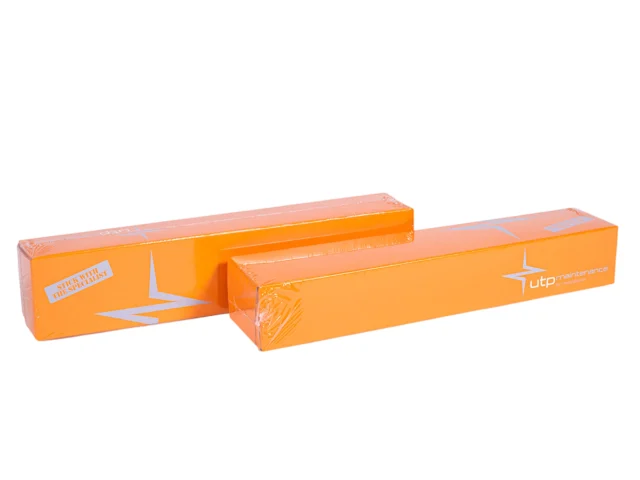
Thermanit Nicro 82 stick electrode

EN ISO classificationEN ISO 14172: E Ni 6082 (NiCr20Mn3Nb)
AWS classificationAWS A5.11 / SFA-5.11: ENiCrFe-3 (mod.)
ApprovalsTÜV (01775), TÜV (KTA 1408.1) (08129.00), DNV
Price on request
Give us the diameter and the quantity, we will quote during working hours

Spawlab is the data controller. We will use your data only for replying to this price enquiry. See the privacy policy for details.

Authorised distributorvoestalpine Böhler Welding
Shipping in 24 hfrom the warehouse in Krotoszyn
Data sheetcomposition, properties, specifications
Wire selectionhelp from a welding engineer
Manufacturer data sheet
Application

What Thermanit Nicro 82 stick electrode is used for

Thermanit Nicro 82 is a nickel base covered electrode of the E Ni 6082 / ENiCrFe-3 (mod.) type. The deposit is stainless, heat resistant and creep resistant, and it keeps its toughness down to -269 degrees C. The manufacturer recommends it for austenitic to ferritic joints, for joining and surfacing heat resistant Cr and CrNi steels and for nickel alloys.

The base grades are 1.4583 (X10CrNiMoNb18-12), 1.4539 (X2NiCrMoCu25-20) and the alloys 2.4816 and 2.4817. The structure of the deposit is austenitic, and no brittle chromium carbide zones form at the ferrite to weld metal transition, even after heat treatment above 300 degrees C. The service temperature limits are 550 degrees C in sulfur bearing atmospheres and at most 900 degrees C for fully loaded welds, with scaling resistance up to 1000 degrees C. The high nickel content limits carbon diffusion from the unalloyed side, which is why the material suits buffer layers in difficult joints.

  • Classification EN ISO 14172: E Ni 6082 (NiCr20Mn3Nb)
  • AWS classification A5.11 / SFA-5.11: ENiCrFe-3 (mod.)
  • Current: DC+
  • Diameters: 2.5 / 3.2 / 4.0 / 5.0 mm
  • Lengths: 300, 350 and 400 mm
  • Approvals: TÜV (01775), TÜV KTA 1408.1 (08129.00), DNV

In a dissimilar joint lay the first layer on the more highly alloyed material, and at the transition to carbon steel limit dilution with a low current. The pool of a nickel alloy is sluggish, so guide the electrode more slowly than the reflex learned on carbon steel suggests. When the joint works in a sulfur bearing atmosphere, watch the 550 degrees C limit, because above it nickel reacts with sulfur. Protect the electrodes from moisture and store them in the original packaging.
Manufacturer datasheet

Chemical composition and properties from the manufacturer datasheet

Datasheet PDF

Typical all-weld metal values from the voestalpine Böhler Welding datasheet, edition 10/2023. Manufacturer minimum in brackets. Values depend on the heat treatment condition and shielding gas given for each row and do not replace testing of your joint according to your WPS.

Welding data and approvals
Polaritydirect current, electrode positive (DC+)
ApprovalsTÜV (01775), TÜV (KTA 1408.1) (08129.00), DNV
Datasheet edition10/2023
Mechanical properties of the all-weld metal, typical values
Condition Yield strength Re, MPa Tensile strength Rm, MPa Elongation A, % Impact energy KV, J at 20 °C Impact energy KV, J at -196 °C
u 440 (min. 360) 680 (min. 600) 40 (min. 22) 120 100
  • u: untreated, as-welded
Fits

For which materials and machines

Base materials
  • 1.4583
  • X10CrNiMoNb18-12
  • 1.4539
  • X2NiCrMoCu25-20
  • 2.4816
  • 2.4817

current: DC+

Process and machines

Stick electrode, works on any sound machine for this process: welders.

Used welders New welders Ask us to help you choose
From the same group

Other wires for this application

All: Stick electrodes