


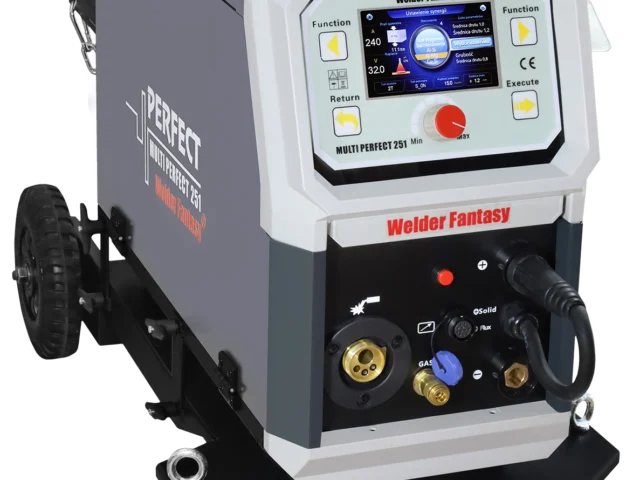
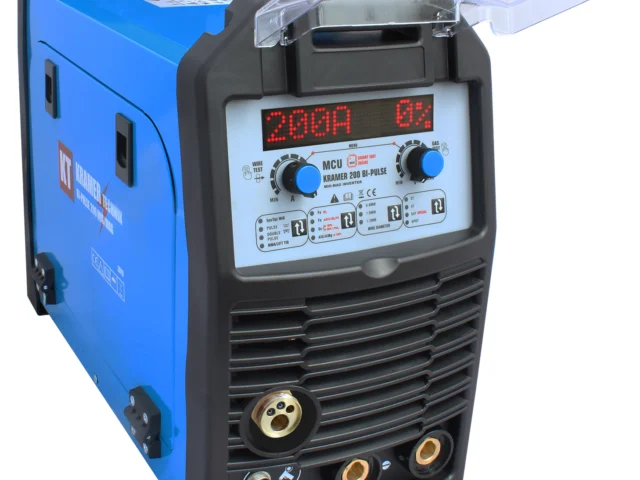
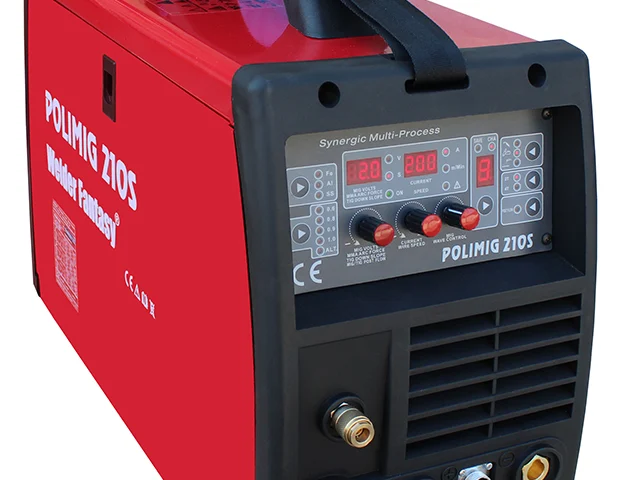
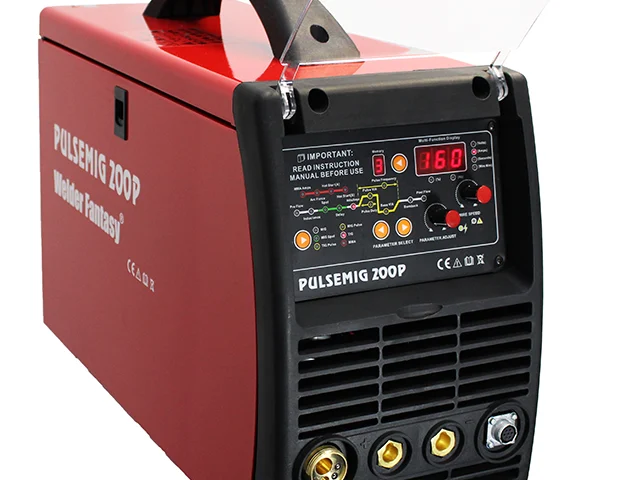
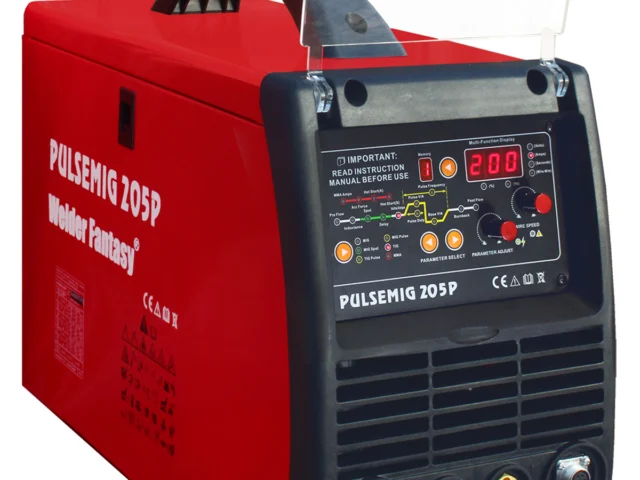
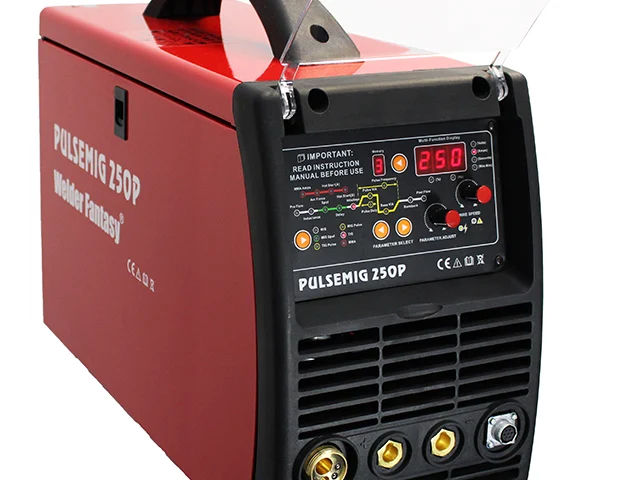
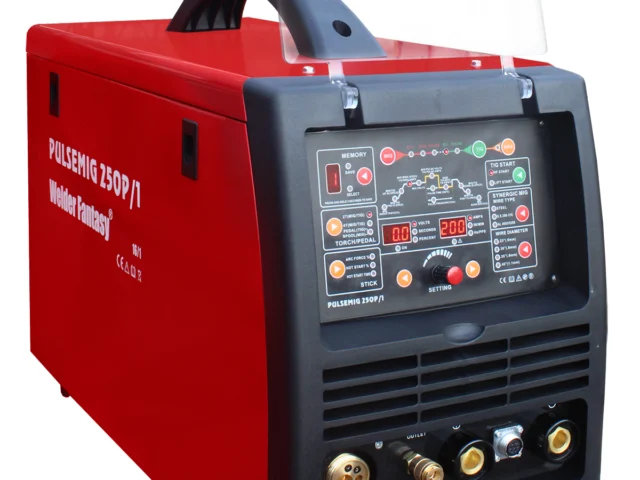
Start with thickness and with the pace of your work. Sheet from 1 to 5 mm in a garage is handled by a 200 A compact on 230 V with a two-roller feeder. Structures from 6 to 12 mm in a small plant call for 250 to 350 A on 400 V and a four-roller feeder. Series production above 12 mm means 400 to 500 A, water cooling and a feeder on a trolley with an interconnecting lead.
The difference between a thyristor machine and an inverter is not only weight. An inverter gives smoother adjustment, supports pulse and synergic modes, but it needs a cleaner supply. A transformer machine copes better with fluctuations and is simpler to repair.
Synergic control shortens setting up: you choose the material, the gas and the wire diameter, and the machine proposes the voltage and the feed speed. On mild steel in M21 mixture, that is 82 percent argon and 18 percent CO2, 0.8 mm wire works across roughly 60 to 180 A, 1.0 mm wire from 90 to 260 A, 1.2 mm wire from 120 to 350 A.
For aluminium you need U rollers, a PTFE liner, a torch with a short lead or a push-pull torch, and pure argon. For self-shielded flux-cored wire a polarity change is essential.
When ordering, count the cost of consumables as well: contact tips, gas diffusers, liners. On torches of common types a full set is cheap and available. In the product listing we state which torch is included and which consumables fit it.