
![Spartus Termokredka SPARTUS® 1200 °C [ 2192 °F ]](http://staging.spawlab.pl/wp-content/uploads/2026/09/spartus-termokredka-spartus-1200-c-2192-f-1-640x480.webp)
A temperature stick is the simplest way to check preheat and interpass temperature. You draw a line on the material and watch: the stick melts exactly at its rated temperature, so you get a clear answer on whether the next pass may be laid. For plain carbon steel above 25 mm the typical range is 100 to 150 degrees Celsius, and for quenched and tempered steels the welding procedure sets the value.
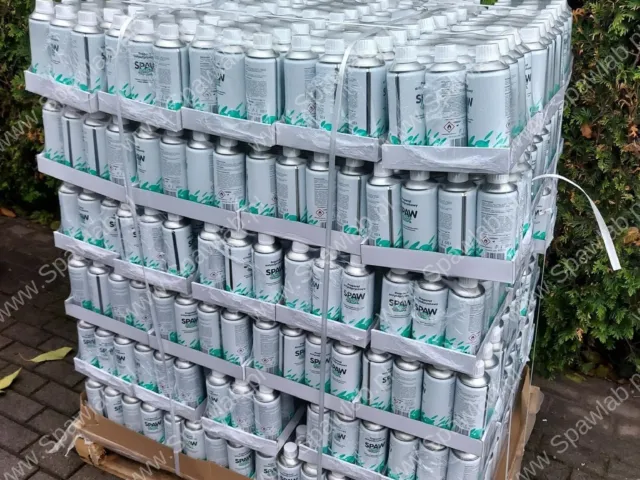
Anti-spatter spray goes on the gas nozzle and on the plate around the weld. Spatter does not stick, so the nozzle lasts longer and the part does not need chipping. For stainless steel choose products without silicone and without chlorides, because silicone prevents later painting and chlorides start pitting corrosion.
After welding stainless steel the coloured oxide layer has to be removed, otherwise the steel loses corrosion resistance in the discoloured zone. Pickling paste dissolves the oxides and a passivation agent rebuilds the chromium layer. Work in acid resistant gloves and rinse thoroughly, following the product safety data sheet.
Coolant for water coolers is not tap water. Ready mixed fluids contain corrosion and frost inhibitors and in winter protect the pump and torch from bursting. Distilled water without inhibitors quickly scales up the channels in the torch.