

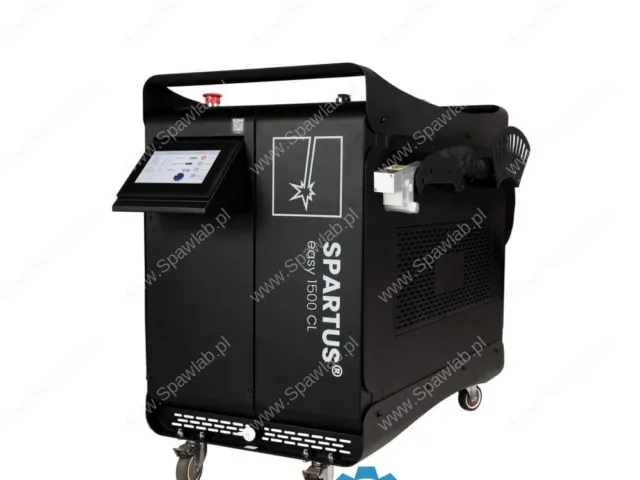
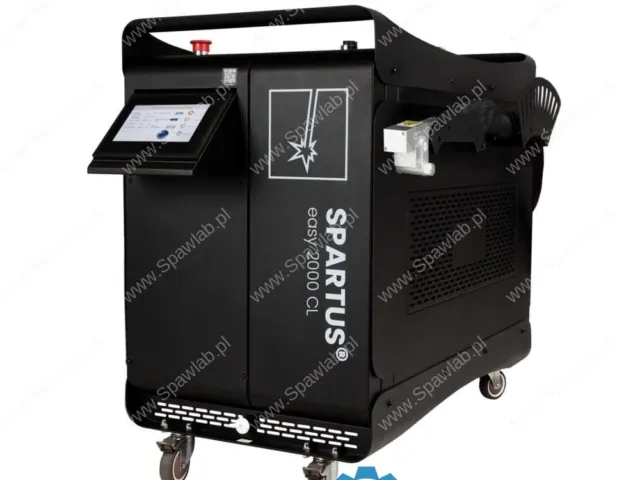
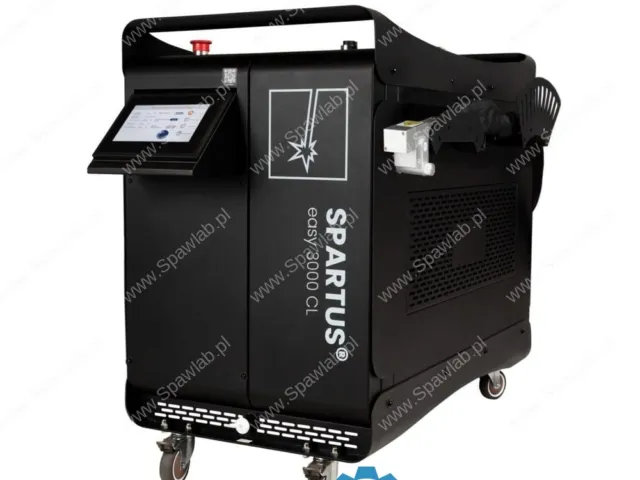
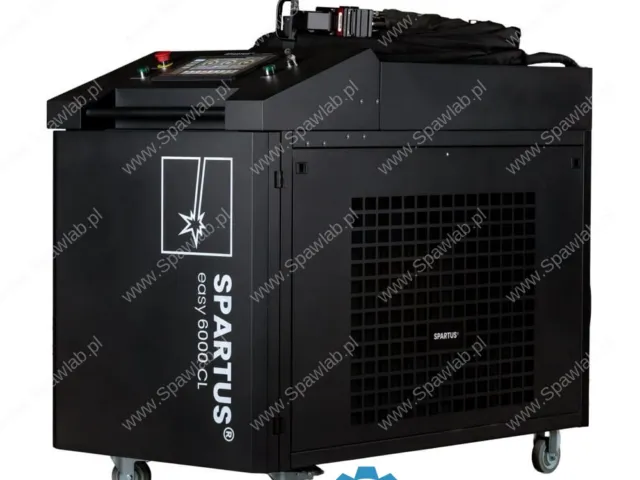
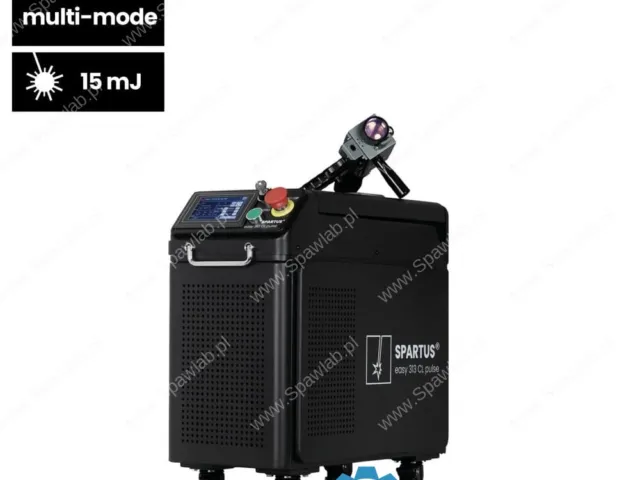
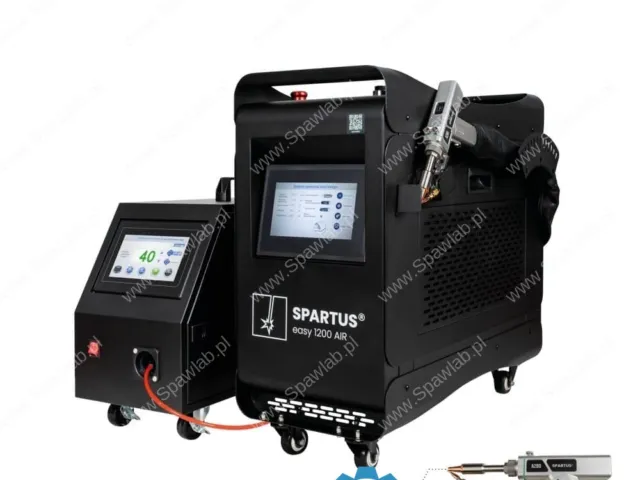
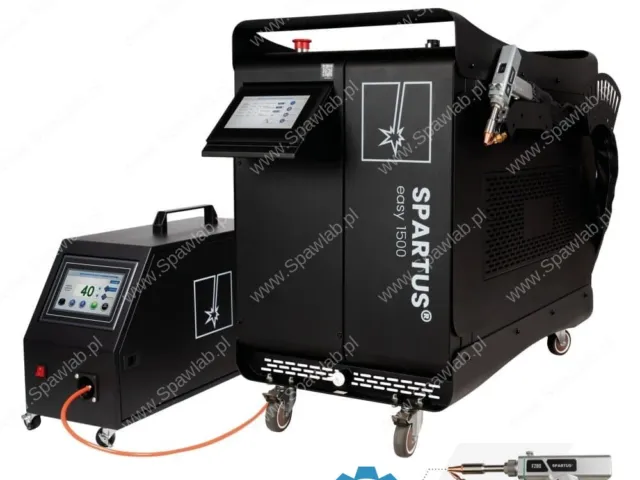
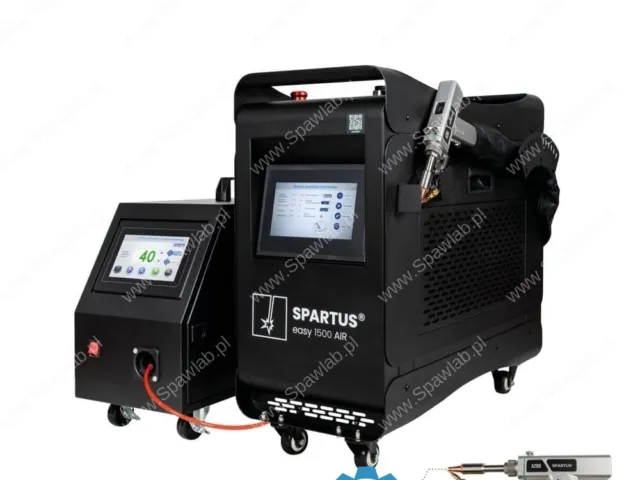
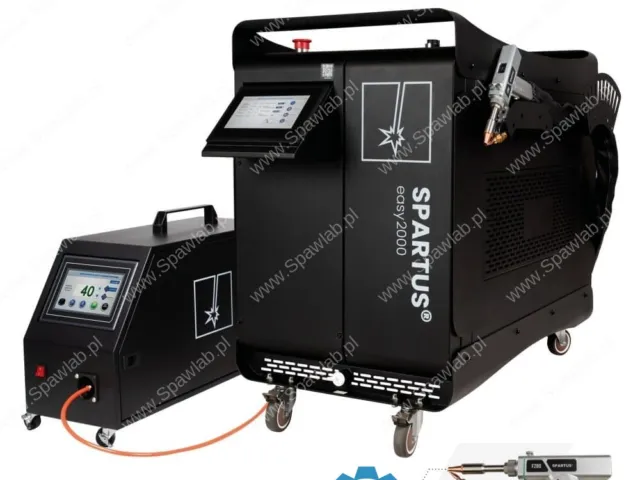
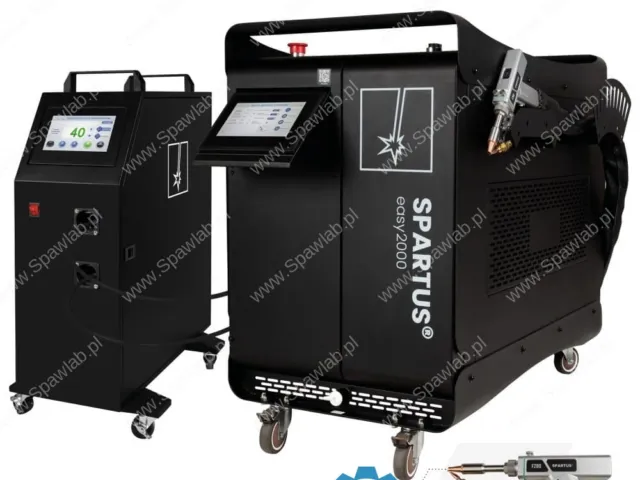
Handheld laser welding is the fastest way to join thin sheet today. On 1.5 mm stainless steel the speed reaches several metres per minute, the weld is narrow and the heat affected zone is several times smaller than with TIG. In practice that means no distortion on large panels and much less grinding afterwards.
Match the power to the thickness. A 1.5 kW source welds steel and stainless steel up to about 3 mm in a single pass, 2 kW reaches 4 to 5 mm. Aluminium needs more power than steel at the same thickness, because it reflects part of the beam and conducts heat away faster. A head with beam oscillation widens the weld and forgives poorer edge preparation.
Safety is a condition here, not an extra. A fibre laser works in class 4, so the station needs an enclosure made of beam resistant material, filtering windows and a door interlock, and the operator needs goggles with the right protection factor for a wavelength of 1080 nanometres.
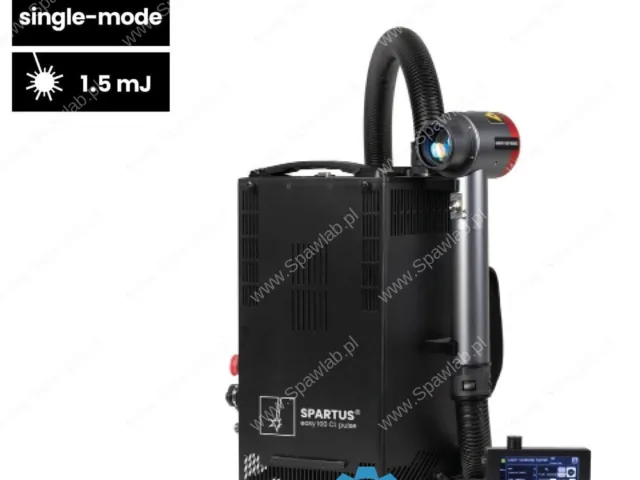
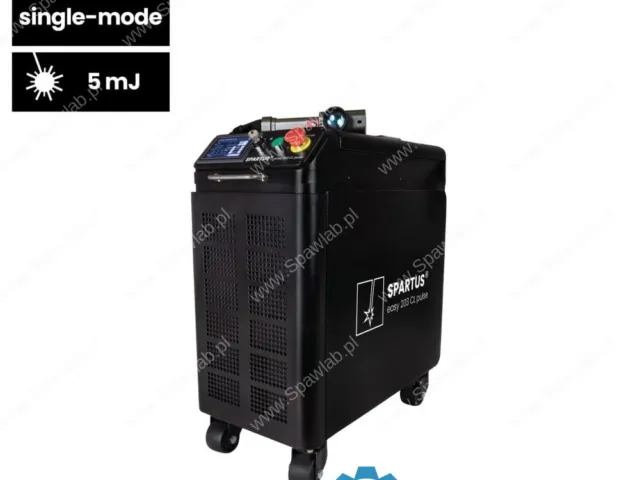
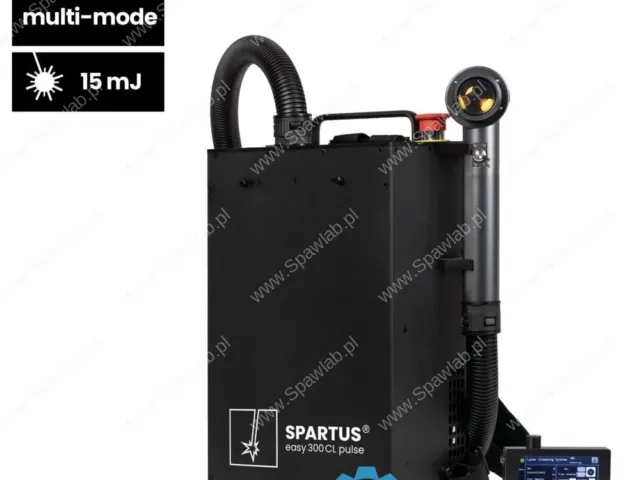
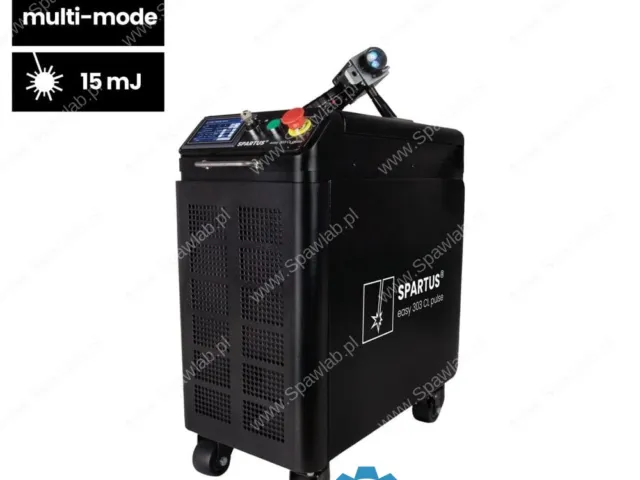
A laser cleaner removes rust, paint, scale and oil without abrasive and without chemicals, so there is no dust and no waste to dispose of. Models of 100 and 200 W suit restoration and weld cleaning, above 1 kW they strip heavy coatings over large areas.