
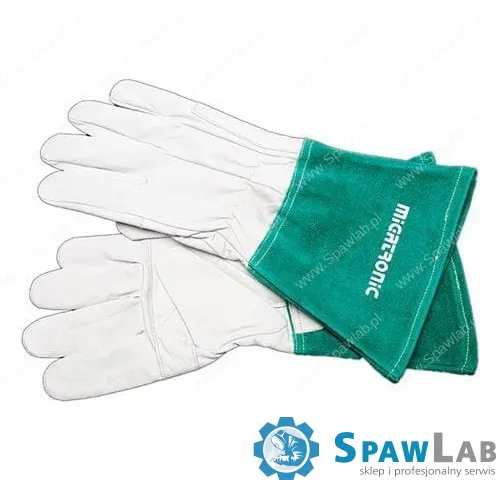
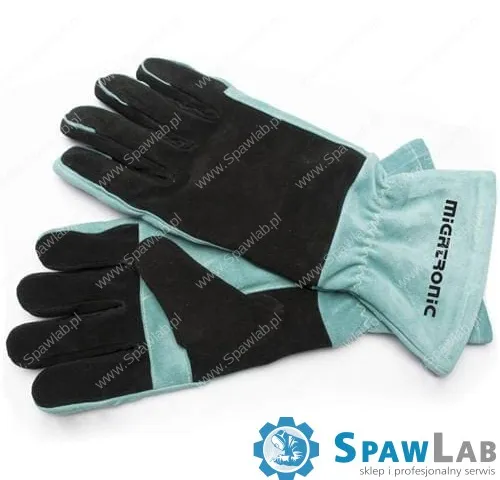
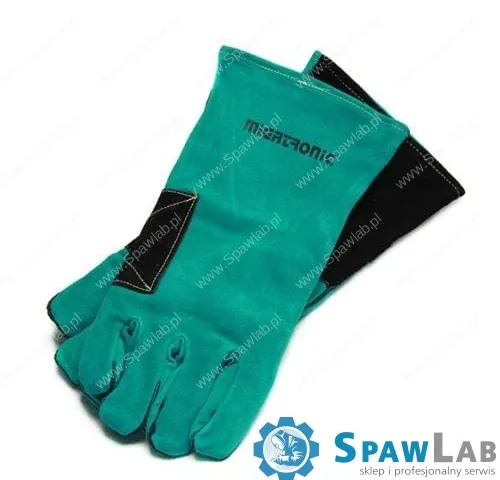

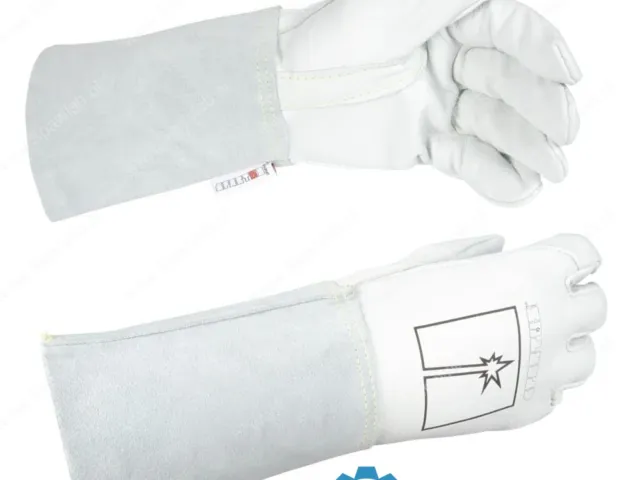
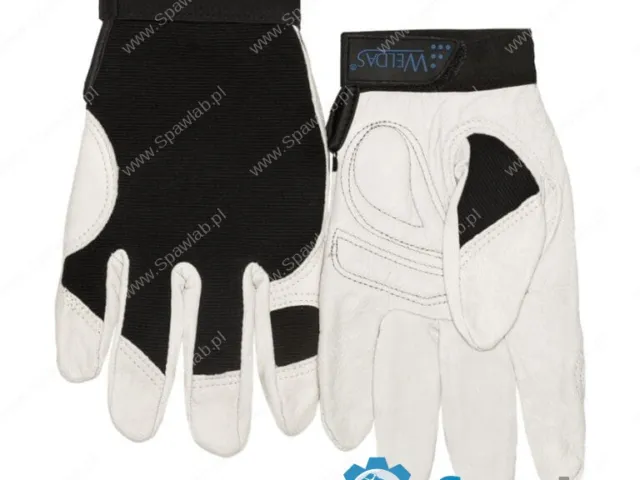
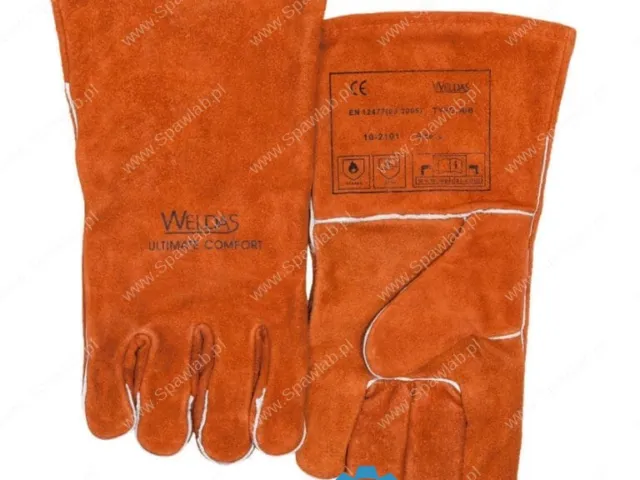
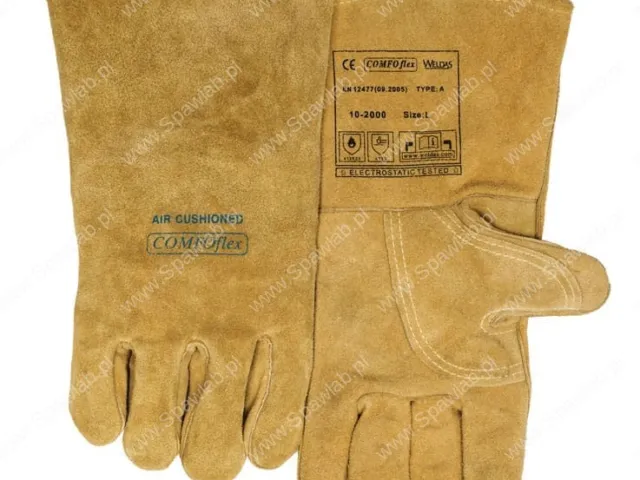
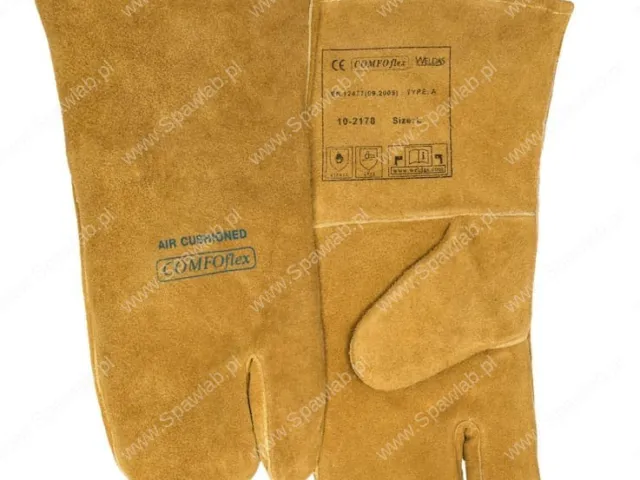
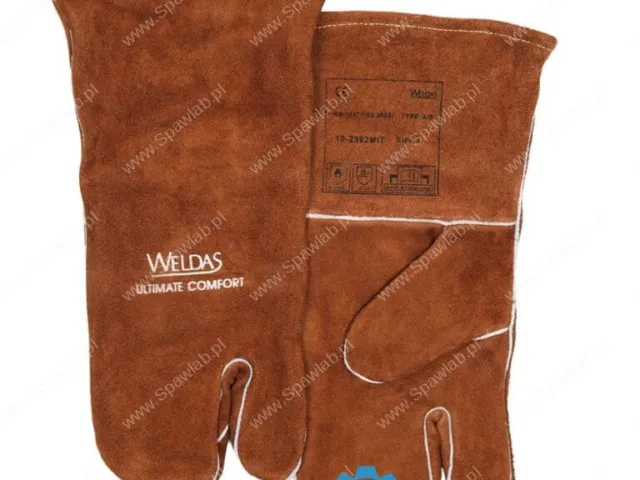
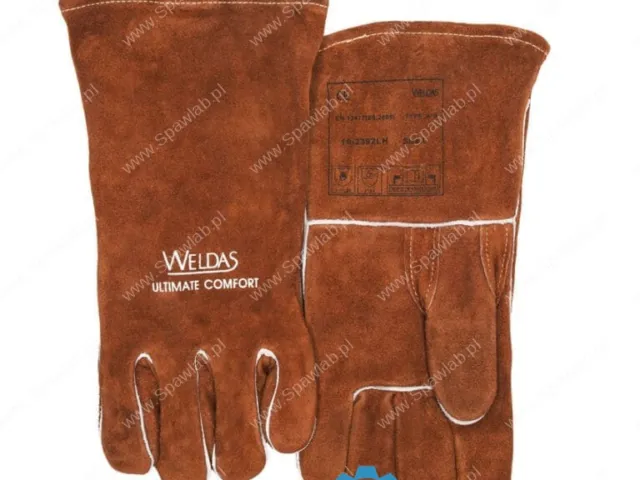
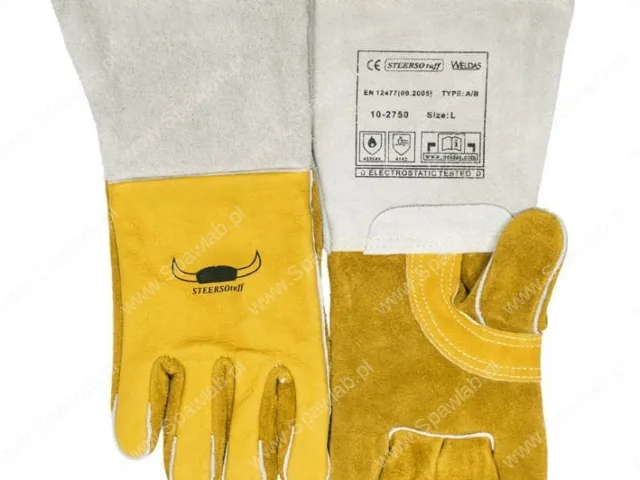
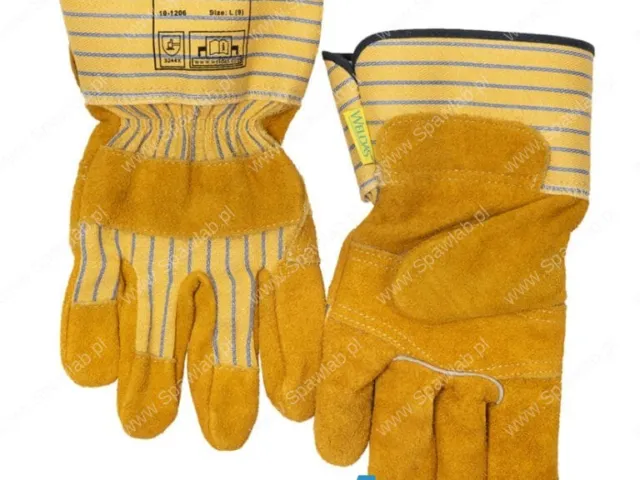
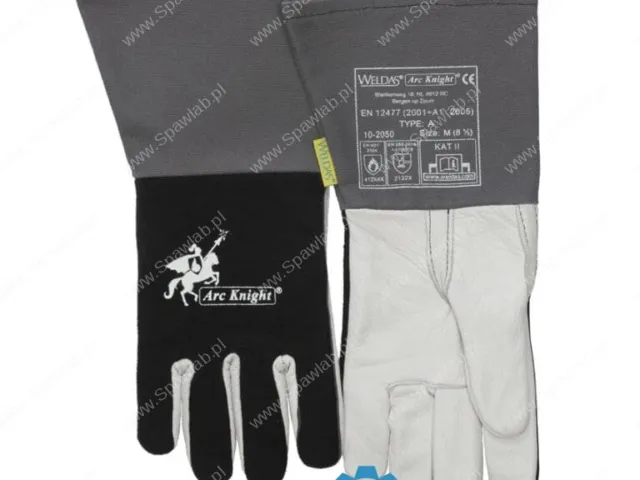
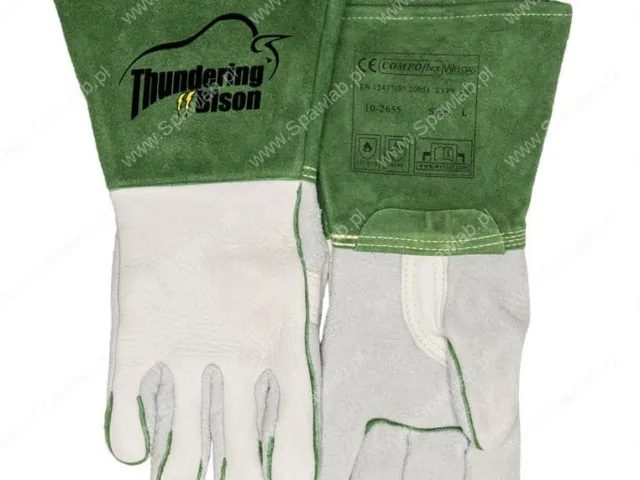
Welding gloves are divided by EN 12477 into type A and type B. Type A gives higher thermal and mechanical resistance, so it suits MMA, MIG/MAG and cutting. Type B is thinner and gives better feel, which is why it is used for TIG, where you feed filler with your fingers.
The material is matched to the process. Goatskin is thin and soft and lets you feel the rod, but takes spatter less well. Split cowhide is thick and spatter resistant at the cost of precision. For MIG/MAG at high currents take lined gloves, because leather alone conducts heat faster than you expect in continuous welding.
Check the seams and the cuff. Kevlar thread survives contact with hot metal; cotton thread burns through and the glove opens where wear is highest, between thumb and index finger. The cuff should be at least 15 cm so that it goes under the jacket sleeve and leaves no bare wrist when your arm is raised.
Choose a size with room to move but no slack across the palm. A glove that is too large slips when you grip the torch and loses feel, one that is too small stretches over the knuckles and splits within weeks.